Field notes
What happens when you leave an inexperienced technician in charge of a whole Broadcast Center?
September 10, 2026 · 6 min read · Gabriel Moura
Exactly that. In my second contract, coming from a slightly different field on land, I joined a new company that had just rebuilt its ship and was about to start operations.
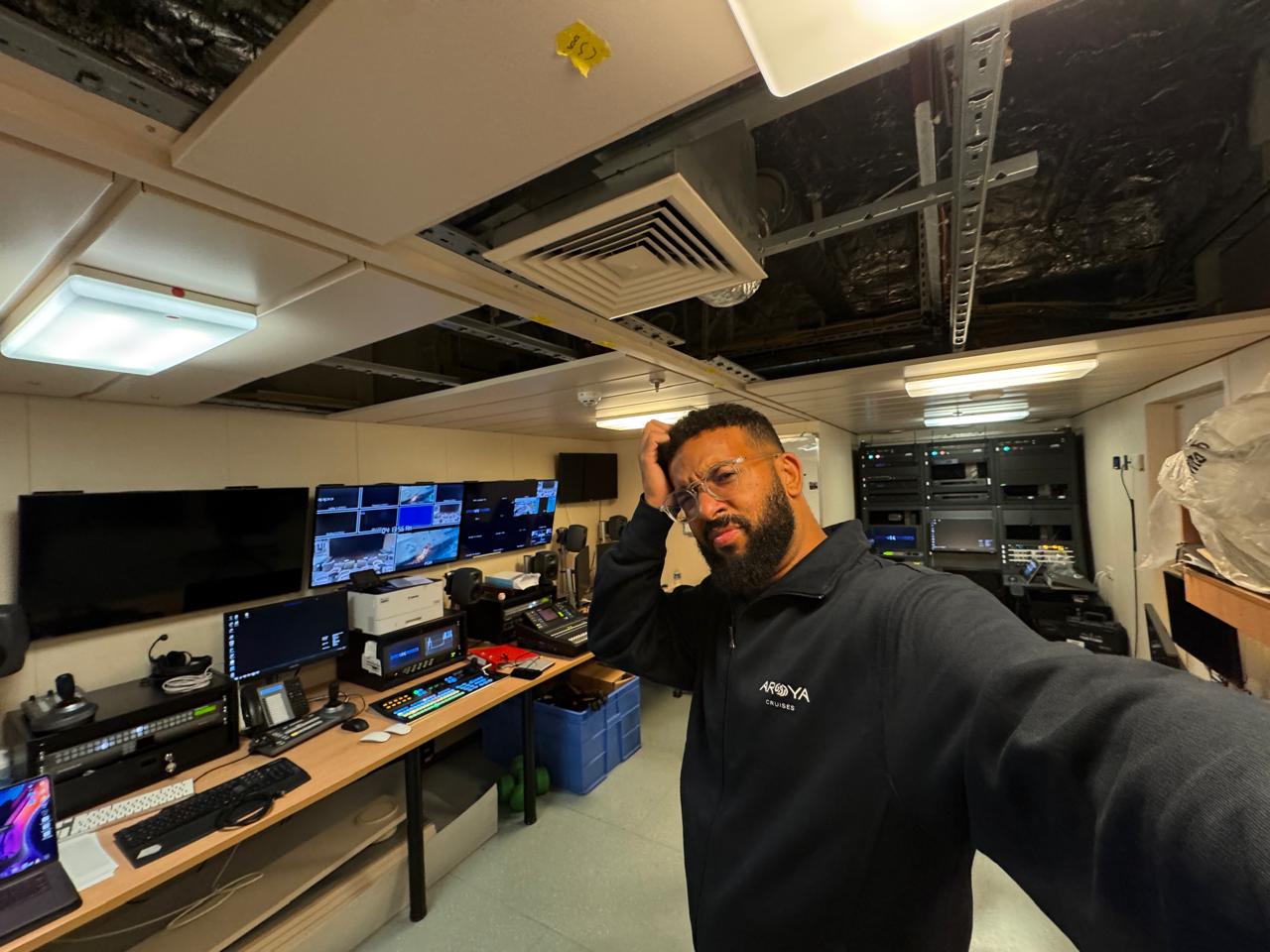
Welcome to the start-up team! There will be some surprises along the way.
So many things happened during that contract that I don't even know where to start. But it was one of the most important experiences I've had — at least from an accomplishments point of view — so it's worth breaking my head to make this story readable.
To begin from the beginning: who am I, and what was my background?
I started with formal tourism and hospitality studies at university. After a while, I decided to pursue a more creative path: I began working as a videographer, moved from the tourism industry into the audiovisual industry, and spent a few years at a TV station before going to work on cruise ships.
My first cruise experience was with a brand-new company, and I was lucky (or unlucky) enough to be the first broadcast technician to arrive onboard. I was not exactly what they were looking for, but everything turned out alright in the end. It was there that I learned the basic concepts of broadcasting — and where I saw “real” broadcast equipment for the first time.
My second ship — this one — was also a brand-new company, and let's say that, ideally, they also needed a more experienced technician. I was the first technician there, and I could not imagine how much work was waiting for me.
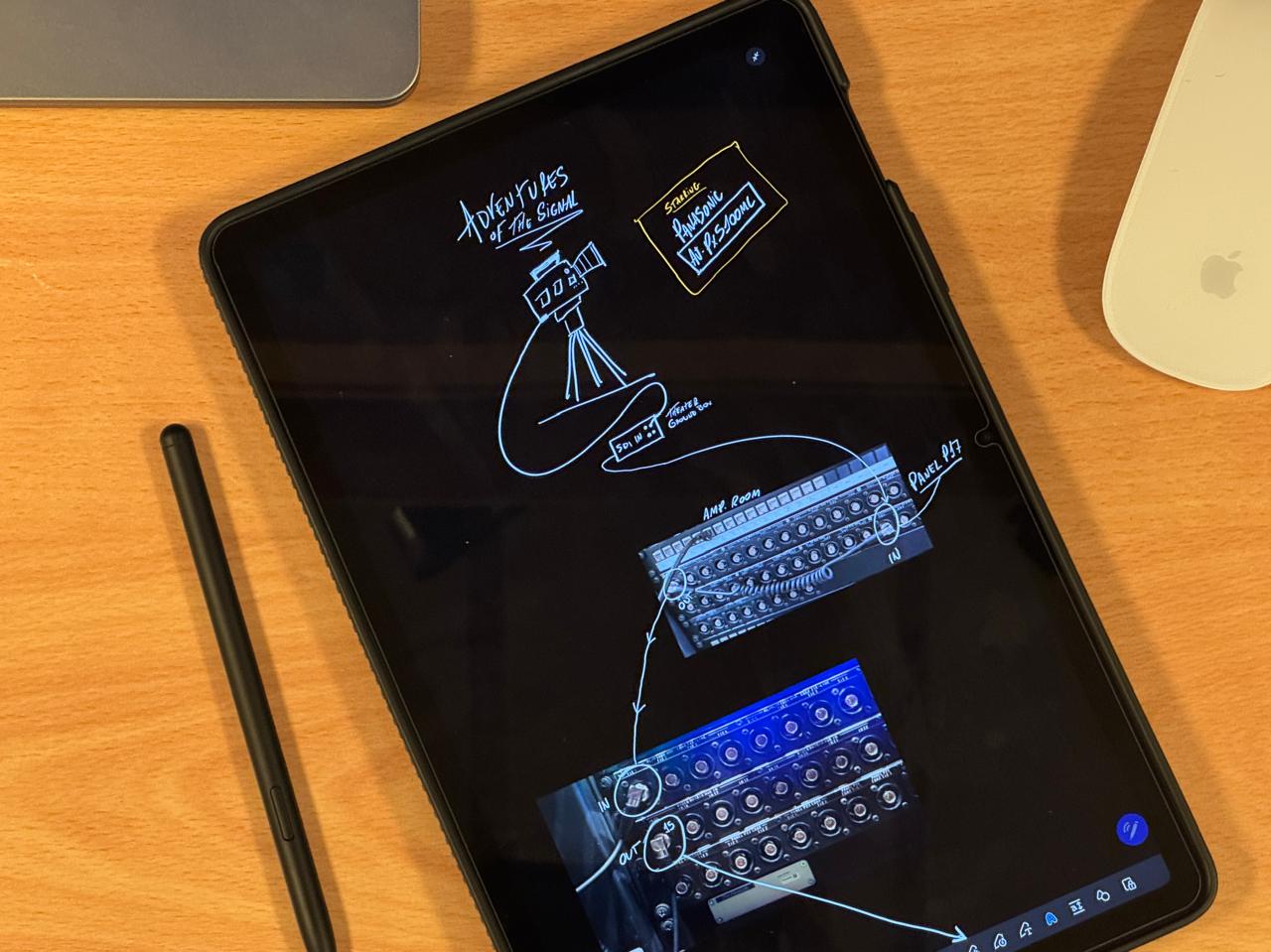
They had bought the ship from another company that had gone bankrupt and refurbished basically everything — but the broadcast center remained untouched. In my favor, I had arrived around twenty days before the maiden voyage, so I had some time to get up to speed on some systems, learn others from scratch, and understand the signal flow.
I was alone there for about a month, so naturally I became responsible for the broadcast center and everything related to it. I didn't have a choice. Haha.
When I first entered the BCC, it was still running the operation from the previous company, a Chinese operator: the video mixer was playing old tour and promotional videos in Chinese, plastic covered the computers, there were holes in the ceiling, old documents scattered over desks and chairs, and cables everywhere.
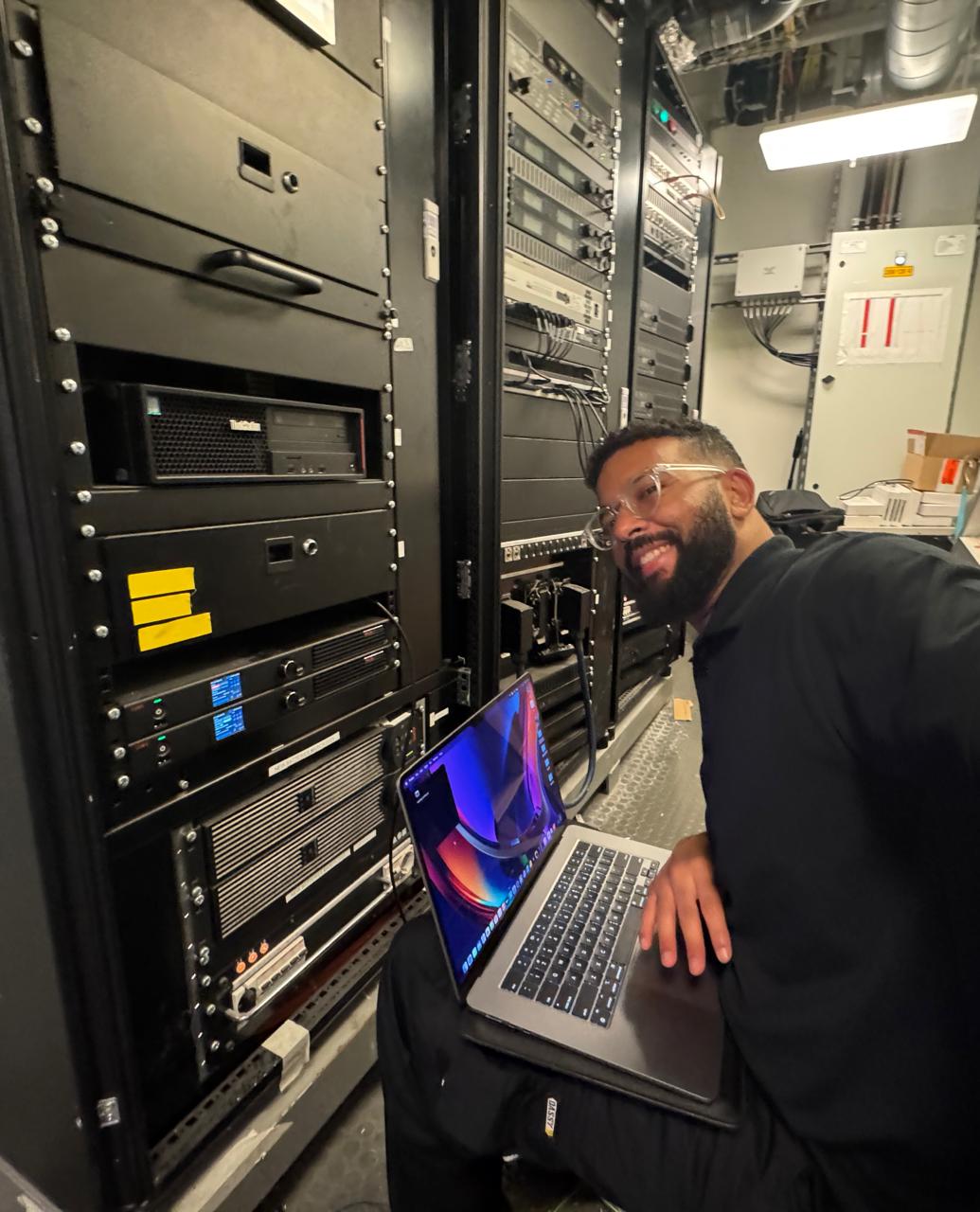
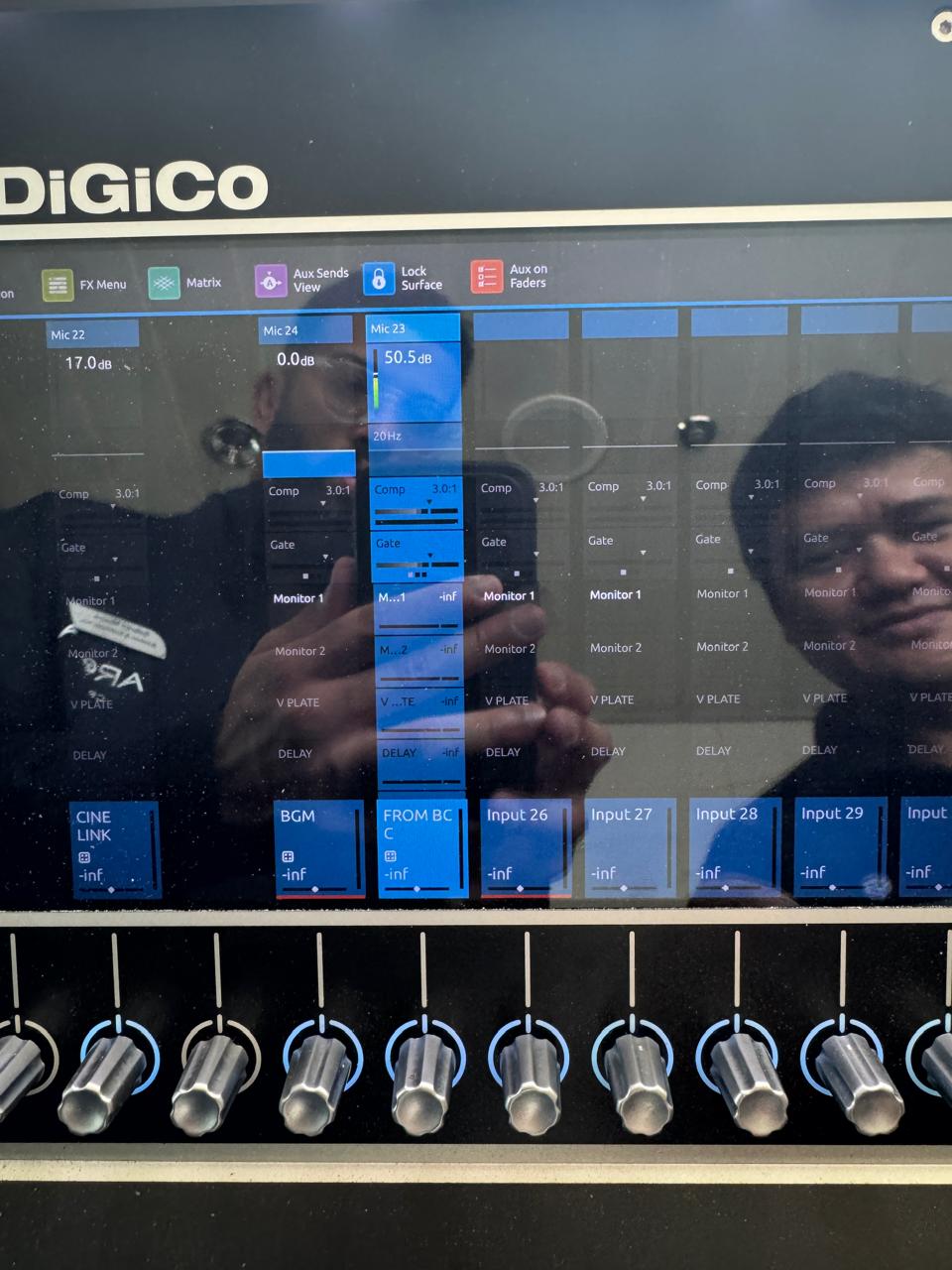
In those first days I spent countless nights working overnight, trying to learn and understand the Pandora's Box (Coolux) system used for the theater screens, figuring out how to change the chandelier visuals on disguise, why the pool LED wall was malfunctioning, how to send sound from the BCC to the aft sports bar, how to connect multiple cameras around the theater for live shows, how to send a multiview to the technicians' cabins, and how to decide which content goes to which TV channel.
Many things I had never done before, I had to figure out on my own — and most of it was trial and error. So much trial and error.
It's funny to think that on my first ship my notes were mostly: “this is a video converter”; “this is the video matrix — we can send video anywhere with that.” I had no idea what an AMX panel was, and I had never heard of Extron, PTZ cameras, QLab… or Coolux, for that matter. It was — and still is — very dense to understand and learn. But we're getting there, little by little, in a process that has no end.
In the first few weeks I focused on learning the routing and Pandora's Box. After the maiden voyage, everything changed: we had to run the operation with guests onboard while still learning and figuring everything out.
The atrium had a big square LED wall that was also hard to understand in the beginning. We played promotional and institutional videos on it. I had to map it, and later — after being called too many times to readjust the scaling — I wrote a tutorial for the other technicians on how to set it up so the video would remain centered on the square screen.
I kept being called after that, though.
Work in progress — this post is still being written
About the author
Gabriel Moura is a broadcast technician and video editor with experience in live production at sea, daily TV news, and freelance videography for the tourism industry.